Free guide
Understanding the Differences in Noncompete Clauses Across States
A noncompete that holds up in Texas can be void in Minnesota. Get the free state guide, updated November 2026: where noncompetes are banned, where pay thresholds and notice rules apply, where courts enforce reasonable agreements, and where the federal rule stands.
About this guide
A three-page guide to how noncompete enforceability varies across the United States, based on state law as of November 2026.
There is no federal ban: the FTC rule was formally removed in February 2026, so state law controls, and it ranges from outright bans to broad enforcement. The free Understanding Noncompete Clauses Across States guide, updated November 2026, shows how the states differ so you know where your agreements stand before you rely on them.
What's inside
- 1
The Federal Picture
The 2024 FTC rule was set aside by a federal court and formally removed in February 2026. There is no federal ban, and the FTC still challenges individual noncompetes case by case.
- 2
States That Ban Most Noncompetes
California, Minnesota, North Dakota, Oklahoma and Wyoming (new in 2025), with each state's exceptions and statute, plus Washington's ban that starts June 30, 2027.
- 3
Pay Thresholds and Worker Protections
The 2026 pay thresholds, notice rules and protected groups in states including Colorado, Illinois, Massachusetts, Oregon, Virginia and Washington, plus the District of Columbia and Tennessee's new 2026 rule.
- 4
States That Enforce Reasonable Agreements
How Florida (including the CHOICE Act), Texas, Georgia and New York judge reasonableness, and the limits many states now put on health care noncompetes.
- 5
Before You Use One
Confirm which state's law applies to each employee, check the current pay threshold, give any required notice, and consider confidentiality and narrow customer nonsolicitation agreements instead. Review with legal counsel.
From the podcast

More free HR resources
See all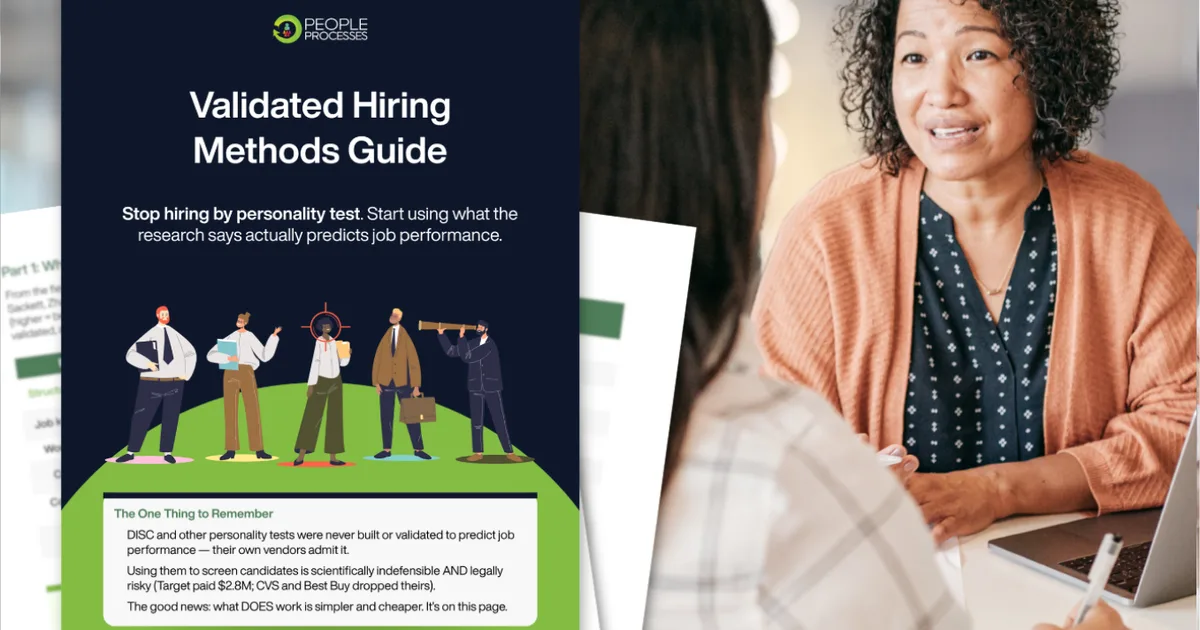 GuideValidated Hiring Methods GuideDISC was never validated to predict job performance, and personality screens have cost employers like Target $2.8 million.See what's inside
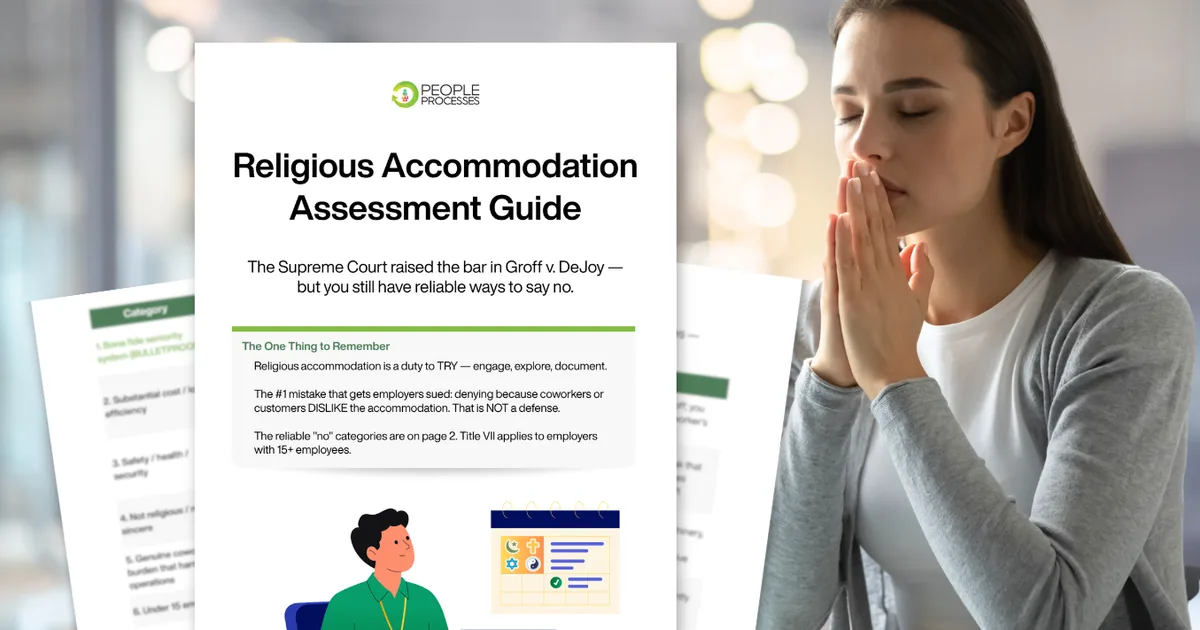 GuideReligious Accommodation Assessment GuideA unanimous Supreme Court threw out the old "de minimis" rule in Groff v. DeJoy, and the EEOC is suing employers as big as Apple.See what's inside