Free guide
Choosing the Right Safe Harbor Match for Your Group 401(k)
A safe harbor match lets your 401(k) bypass certain compliance testing, but the formula you pick drives your cost. Get the free guide: five safe harbor match options compared, traditional vs QACA plans, our recommended picks and a simple way to estimate the budget.
About this guide
The safe harbor match options side by side, the two kinds of safe harbor plans, our recommendations and the factors that should drive your choice.
Safe harbor plans guarantee an employer contribution so your 401(k) can bypass certain compliance testing. But the match formulas cost very different amounts, and some only work with automatic enrollment. The free Choosing the Right Safe Harbor Match guide compares the options and shows you which ones we recommend.
What's inside
- 1
Traditional vs QACA Safe Harbor
A traditional plan needs no automatic enrollment and vests immediately. A QACA must auto-enroll eligible employees at 3% of pay or more, rising to at least 6% by year four, and in return can use a lower match and up to two years of vesting.
- 2
Five Match Formulas Compared
From the common 4% maximum (100% of 3%, then 50% of the next 2%) to flat 4%, 5% and 6% matches, with the vesting and enrollment rules for each.
- 3
Our Recommended Options
The QACA 3.5% maximum match with optional two-year vesting as our first pick, and the 100% up to 6% match for extra motivation. Both two-year vesting designs require automatic enrollment.
- 4
How to Choose
The factors to weigh: budget (maximum match times an estimated participation rate, about 65% without automatic enrollment), employee preferences, long-term goals and administrative ease.
- 5
Notices and New Plans
Every eligible employee gets a notice 30 to 90 days before each plan year. Most plans set up after December 29, 2022 must auto-enroll starting with the 2025 plan year, with exemptions for small and new businesses.
From the podcast

More free HR resources
See all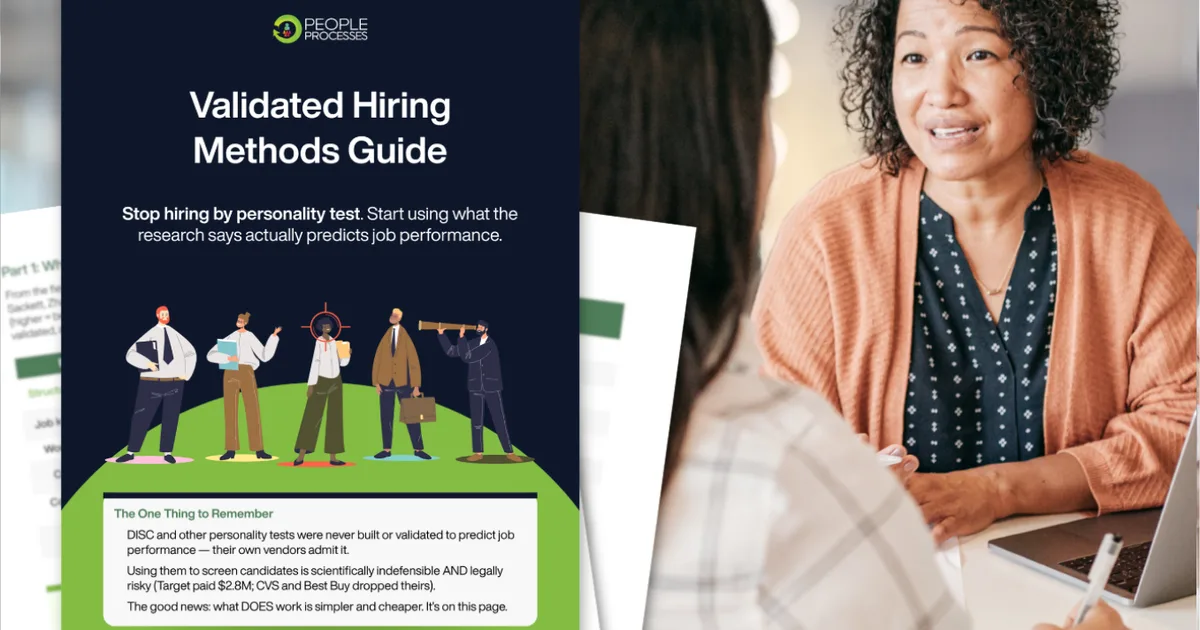 GuideValidated Hiring Methods GuideDISC was never validated to predict job performance, and personality screens have cost employers like Target $2.8 million.See what's inside
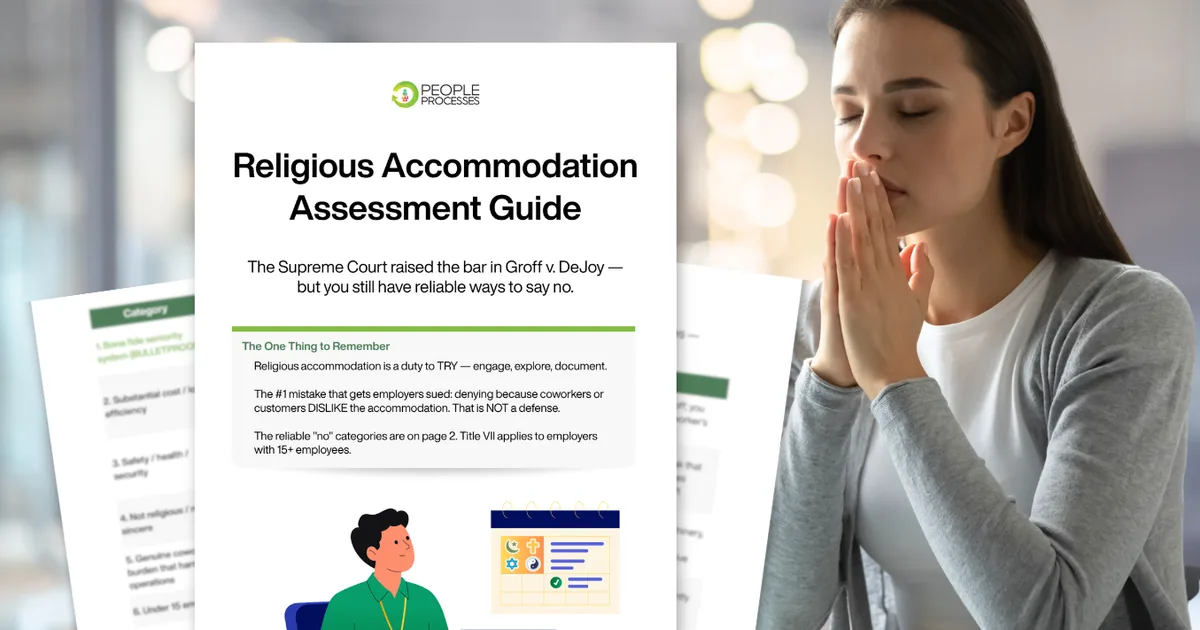 GuideReligious Accommodation Assessment GuideA unanimous Supreme Court threw out the old "de minimis" rule in Groff v. DeJoy, and the EEOC is suing employers as big as Apple.See what's inside